Research: Hibernation patterns
20th February 2026
Meet Katie
Katie Crawford is undertaking a PhD at Liverpool John Moores University, aiming to answer the question Can behavioural and physiological plasticity help animals to survive in a changing environment? In other words, are hedgehogs able to adapt to human-induced changes to our environment, such as urbanisation and climate change?
Introduction
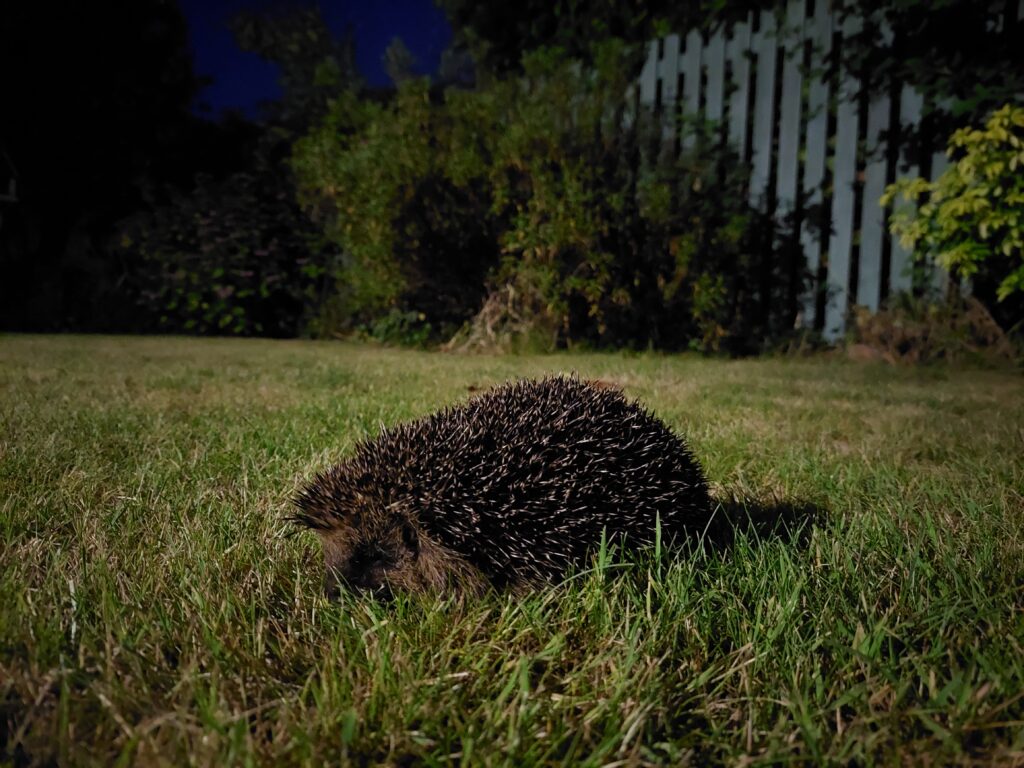
When temperatures and natural food sources decrease during the winter, animals can use hibernation to cope with these conditions. Hibernation consists of bouts of torpor (inactivity) and short arousals, whereby they can forage and switch nests. When in torpor, hedgehogs will reduce their breathing, heart rate and temperature in order to conserve energy.
Hibernation can be affected by environmental conditions. Previous studies have shown that the frequency of arousals from hibernation increases at milder temperatures.
A recent study by Katie Crawford at Liverpool John Moore University investigated the hibernation patterns of hedgehogs in north-west England. The study aimed to find out whether mild conditions during winter affect hibernation.
Methods
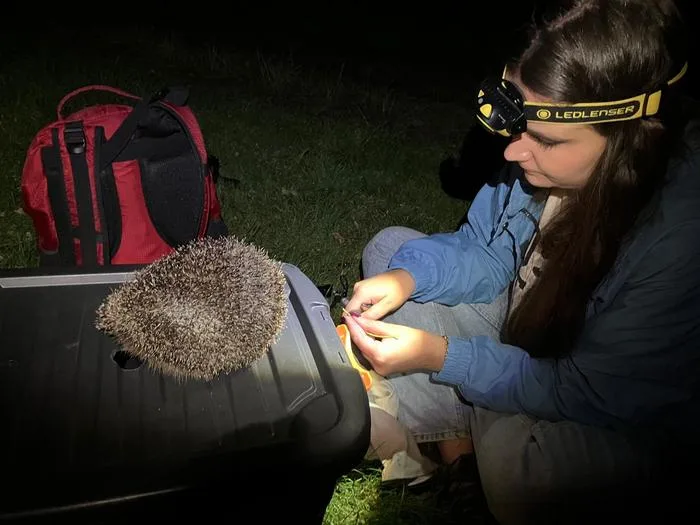
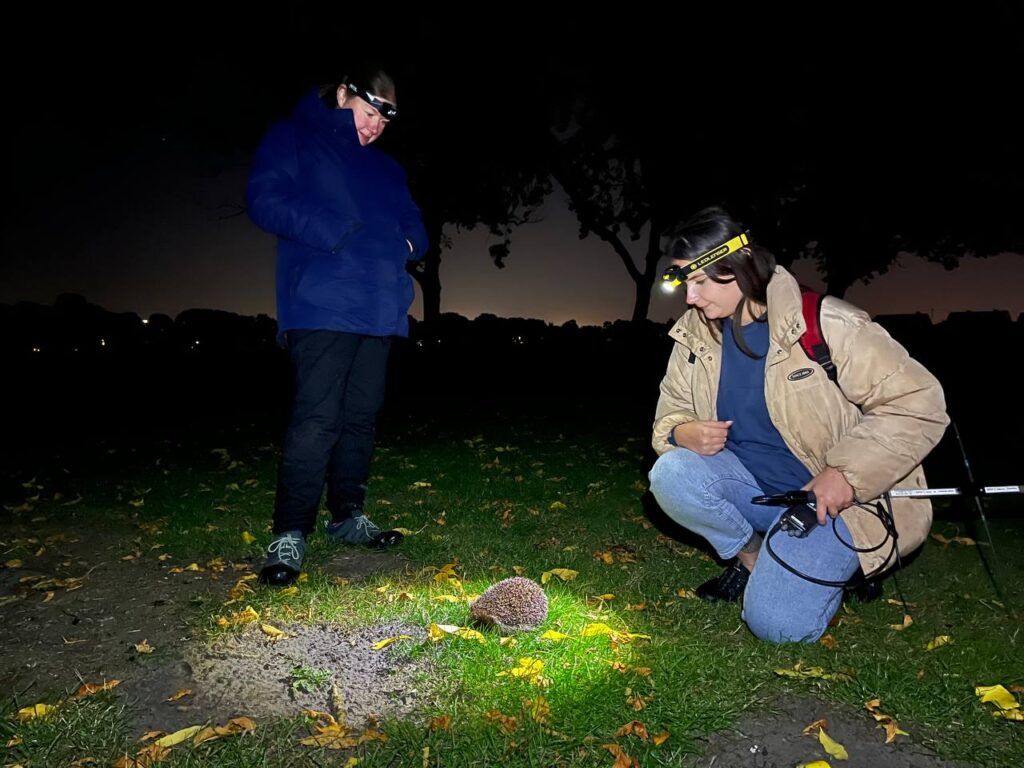
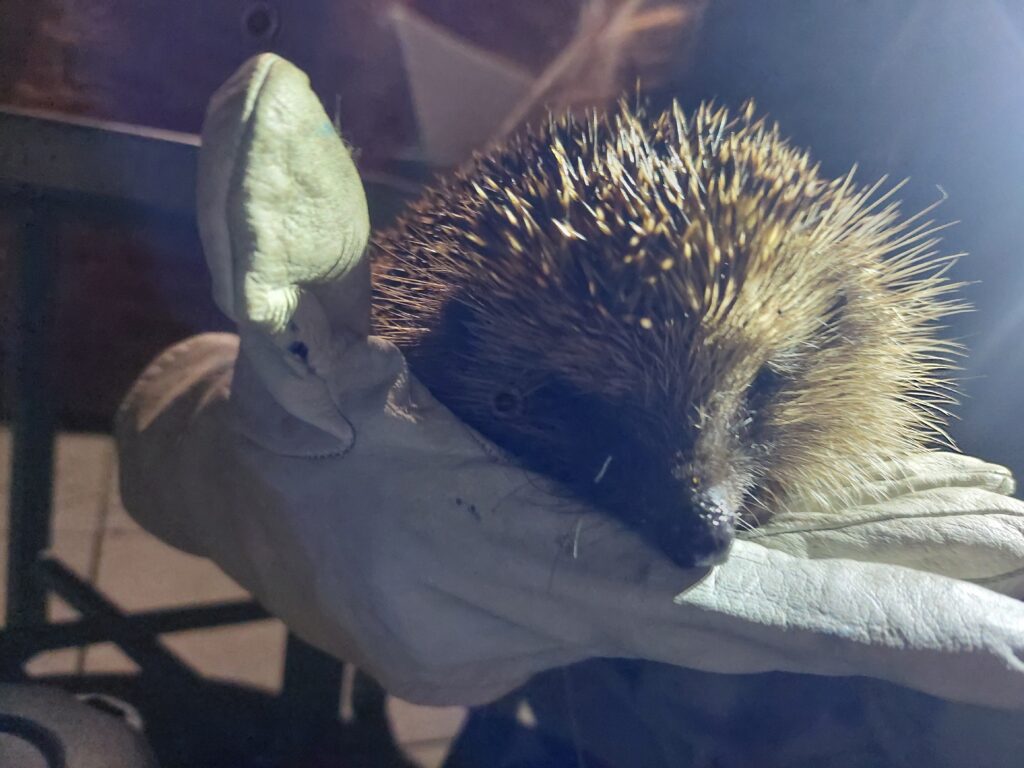
Katie carried out the study on a 54-hectare disused golf course over one hibernation season. She undertook 38 night-time surveys of the golf course, using a torch to find hedgehogs. She hand-caught the hedgehogs and recorded their sex, age, weight, and reproductive status. Then she marked the hedgehogs with numbered and coloured heat shrink tubes attached to their spines. (NB. This research was carried out under licence).
Katie attached lightweight, temperature-sensitive radio trackers to some of the hedgehogs to measure their skin temperature and hibernation patterns.
She located these hedgehogs’ nests using radio telemetry, which uses radio signal transmission to locate a tracker. She used data from receiver stations to find the length of hibernation bouts and arousal phases and the time when hedgehogs started and stopped each phase.
Results
- Katie found that male hedgehogs started and ended their hibernation earlier than females.
- The first tagged hedgehog to enter hibernation (male) started in September, whereas the last hedgehog to enter hibernation (female) started in December.
- Male hedgehog sightings stopped from October to February (except for one male changing nests), while females were sighted every month besides January and February.
- Hedgehogs had longer arousals within hibernation when they were changing their nest site.
- On average, hedgehogs changed nest 5 times over their hibernation. The average time spent in a nest site was 23.4 days.
- Male hedgehogs tended to change their nest site more often and spend less time in each nest compared to female hedgehogs.
- Every hedgehog re-used at least one nest site on different occasions.
- The most common nest type was leaf nests inside shrubs, followed by nests under a log or inside a tree. Most of the hibernation nesting sites were far from human developments, but some nests were found in gardens or hedges on the edge of a garden.
- All the hedgehogs generally had the same pattern of hibernation (multiday bouts alternating with short arousals).
Discussion
Katie’s study found that despite the warmer winter temperatures, all the hedgehogs studied entered hibernation at some point during the winter.
Even though all the hedgehogs lived in the same environment, individuals had different times of hibernation. Since females ended hibernation later than males, there is a risk that climate change could cause mismatches in hibernation between sexes in a way that affects breeding success.
However, the flexibility of the hedgehogs’ timing of hibernation is a sign that hedgehogs could be able to adapt to changing climate conditions.