
Research: Roadkill risks
31st July 2026
Small hedgehog populations at risk of collapse from road mortality
Introduction
Hedgehogs killed by cars are sadly a common sight on British roads; it’s estimated that up to 30% of the hedgehog population is killed on UK roads each year. Road mortality is considered one of the largest contributors to wild animal mortality globally. Hedgehogs can roam up to a mile a night in search of food and mates and this often necessitates the crossing of roads, however not much is known about how exactly the road mortality affects hedgehog populations, especially populations of different sizes.

Lauren Moore
Lauren Moore from Nottingham Trent University, along with a team of researchers, undertook a study to explore the impact of road mortality on population viability (a population’s ability to continue and not go extinct), supported by PTES and BHPS. The effect of road mortality on viability depends on the proportion of individuals killed on roads and other factors that affect population growth (such as survival and reproductive rates). Knowing the impact of road mortality on hedgehog populations is important for future conservation strategies.
As part of her PhD, Lauren focused on road ecology, including how roads and traffic affect hedgehogs and how this can be mitigated. Some of her previous research has been used in a re-assessment of the national hedgehog conservation status and the development of a species conservation strategy.
The study objectives
The study had 3 main objectives:
- Find hedgehog demographic information: density, age and sex structure, annual survival, and female productivity
- Estimate the percentage of hedgehogs killed on roads each year
- Predict hedgehog population trajectory over the next 50 years
Collecting the data
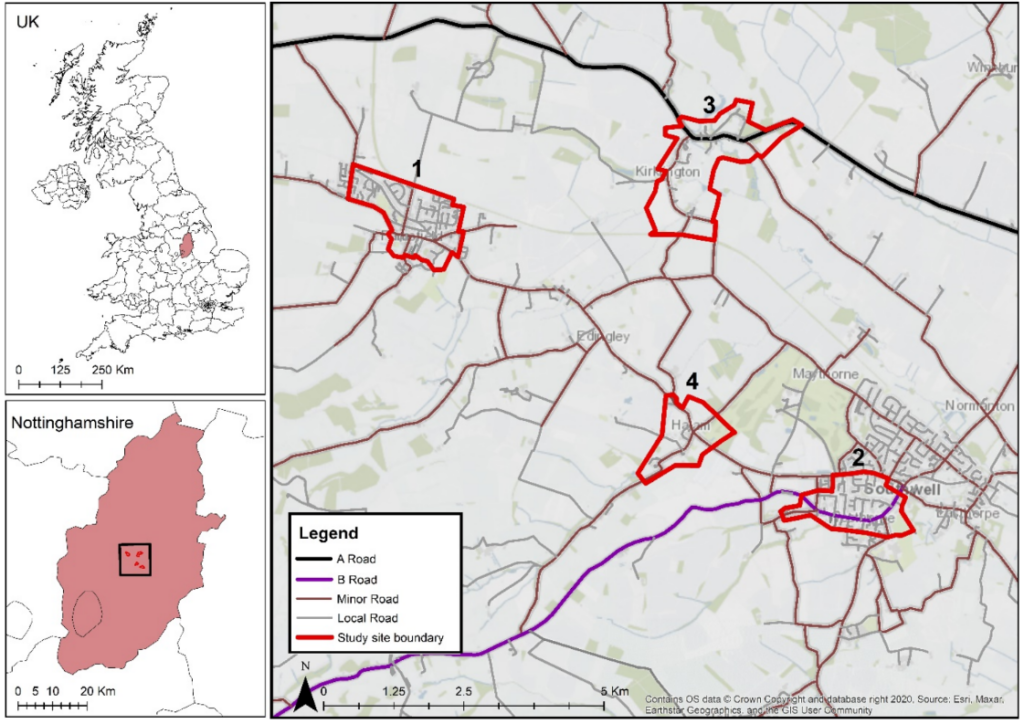
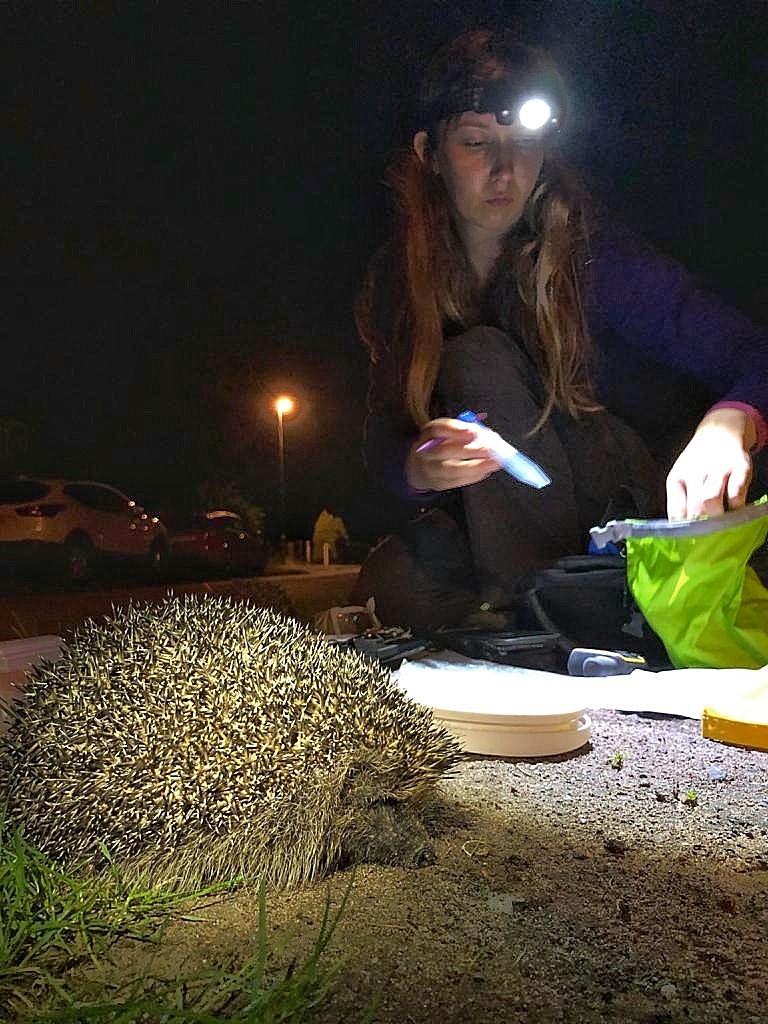
Lauren surveyed four sites in Nottinghamshire with a range of different road and habitat types, and different village and town sizes. The team went on night time spotlight surveys to collect and carefully mark hedgehogs with small coloured tags. All hedgehogs were collected by hand under license from Natural England, and ethical approval was granted by Nottingham Trent University’s Animal, Rural and Environmental Science Ethical Review Group. These hedgehogs were then categorised by male/female and juvenile/adult.
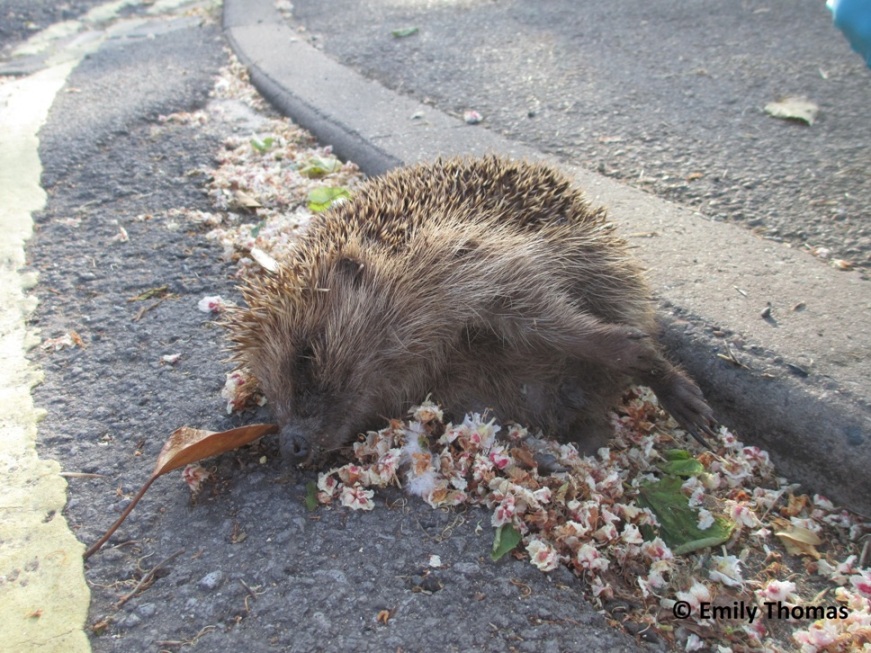
At the same time, Lauren went on driving searches to find hedgehog carcasses within and between the study sites. She drove approximately 70 km every other day for eighteen months, which completed 269 roadkill surveys in each of the four study sites. She found 42 road-killed hedgehogs and the team logged the GPS coordinates, sex, age class and, if present, the identification tag of each one.
The researchers used a scientific model to estimate the size of the hedgehog population in each research area. They then calculated the percentage of hedgehog populations killed on roads. Another scientific model was used to find the population viability of the four study populations. The viability was modelled both under current mortality and future increased mortality scenarios.
Calculating the results
Lauren found that road mortality made up more than 1/3 of total deaths per year for each local population. The models estimated that the two largest hedgehog populations had a >88% probability of survival for 50 years if annual road mortality remained at current or 30% levels.
However, even in the largest populations, if the mortality was 40% or 50% it would cause significant population decline or local extinction. This means that road mortality would be a major threat to overall population viability at 40% or higher.
Even under current road mortality levels, Lauren found that the two smallest populations were declining. In the second smallest population, current road mortality rates reduced the population viability, and in this population the 50% mortality scenario would likely lead to extinction in 9 years. In the smallest hedgehog population, at current road mortality levels, local extinction was expected to occur in four years or less.
The effects of road mortality
This study found that larger hedgehog populations are more resilient to road mortality than smaller populations. The sites with smaller populations had greater proportional losses to road mortality.
In populations with a small number of reproducing females, even the loss of a few females could cause population declines. In the two smallest hedgehog populations, 21.4 – 35.7% of reproducing females were killed on roads each year.
In the smallest populations, the researchers found that even in the current road mortality rates, the breeding populations are too small, so they are likely persisting through the immigration of other hedgehogs into the population. This shows the importance of habitat connectivity.
Lauren’s research reinforced that connectivity to larger populations and reduction of road mortality in small hedgehog populations is important to hedgehog conservation strategy.

