Hedgehog Street People: Hedgehog Researcher Sophie
25th March 2026
Dr Sophie Lund Rasmussen, otherwise known as Dr Hedgehog is a Research Associate at WildCRU, a University of Oxford Research Fellow at Linacre College, Oxford, and an Assistant Professor at Natural History Museum Denmark, University of Copenhagen. She has been working in hedgehog research for 15 years and has produced many important research papers. We wanted to know how her interest in hedgehogs started and all about her recent research.
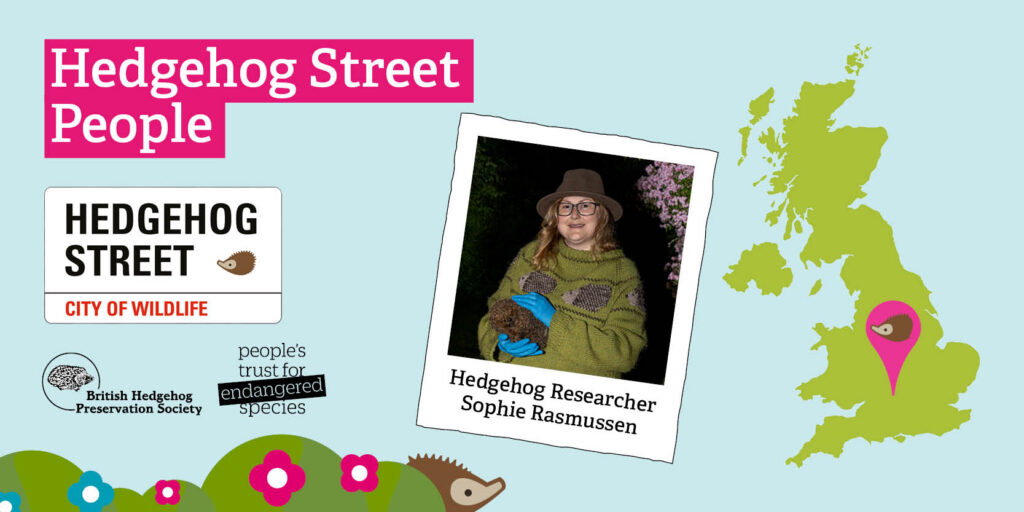
“I think hedgehogs are amazing and mysterious creatures. I love how they have such different personalities that shine through. It is one of the only species of wildlife that you can get very close to, as they freeze and then decide whether to curl up or run away, as danger approaches. This means you can have some very beautiful interactions with the hedgehogs and get a good chance to admire them at a short distance.”
Background
“When I had to decide on the subject of my master’s thesis in Biology back in 2011, I volunteered at a wildlife rehabilitation centre, where I hand raised a lot of orphaned hoglets. I started to wonder whether all the hard work paid – would the hand raised hoglets housed in rabbit cages have the same chances of survival as the ones growing up naturally, in the wild, with their mothers? This became the subject of my thesis, which I defended in 2013. When I started to read up on hedgehog research, I discovered to my great surprise, that this was a pretty neglected field of research. Especially in Denmark, where only two people had published research about hedgehogs for 40 years. I decided then that this would be my path in life, as I realised, I could make a real difference for hedgehog conservation by contributing with research to save the hedgehogs.”
Research
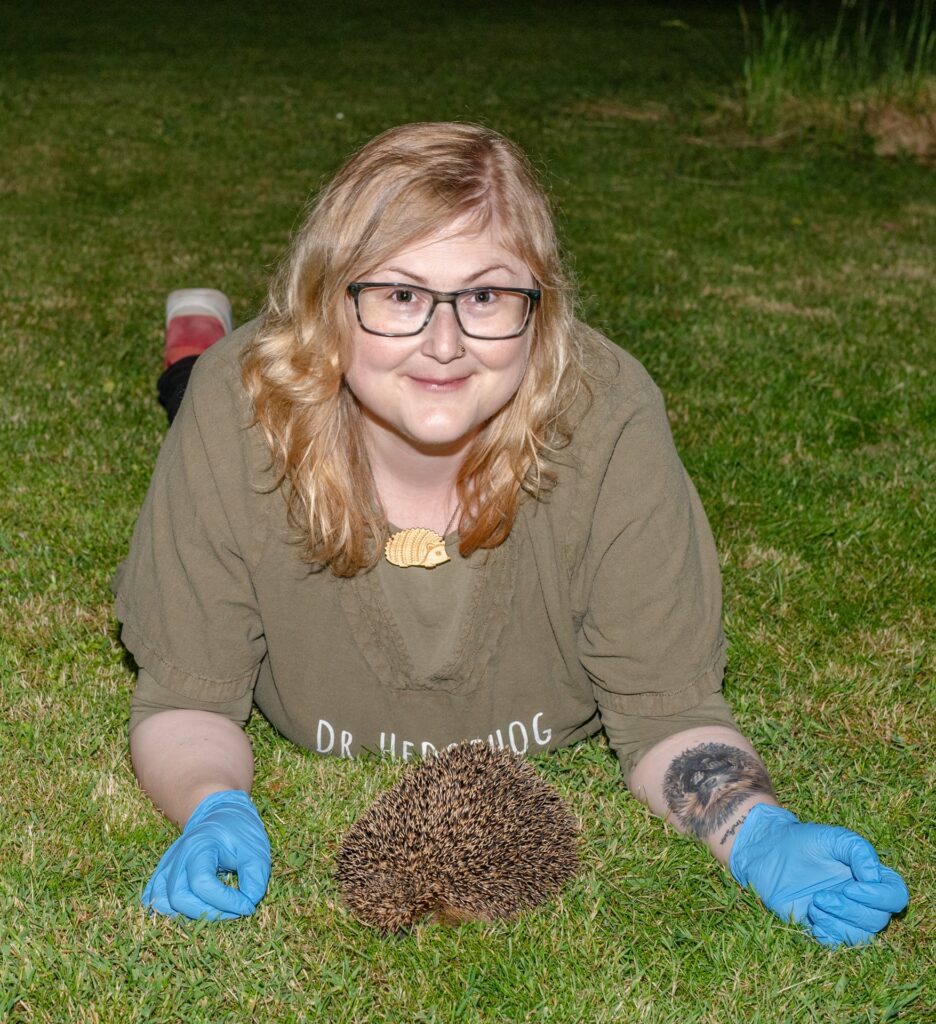
“My role and mission in life are to investigate hedgehog ecology to understand why they are declining. I approach this question from a wide variety of different angles, which makes my research highly multifaceted:
- I manage The Danish Hedgehog Project, a citizen science project in which volunteers collected 697 dead hedgehogs to help us understand the living population. Over the years, I have investigated the ecology of suburban hedgehogs, genetics, dental health, stress, personality, behaviour, and survival of rehabilitated and wild juvenile hedgehogs, as well as endoparasites, age, ecotoxicology, and MRSA/ringworm in hedgehogs.
- I was one of two experts assessing the IUCN Red List status for the European hedgehog, describing the conservation state of the species at both the European and global levels. The report led to an important status change from “Least Concern” to “Near Threatened.”
- I also run the national conservation campaign for Denmark’s hedgehogs, Danmarks Pindsvin, in collaboration with WWF Denmark and a national hedgehog conservation campaign for the hedgehogs of Ireland, called Hedgehog Conservation Ireland.
- I am currently leading research on hedgehog communication and hearing, including the potential development of sound repellents for cars and robotic lawn mowers. I am also Principal Investigator on research projects involving hedgehog coronavirus, microbiomes, diet choice, and the effects of robotic lawn mowers on hedgehogs.
- In addition, I am engaged in several other hedgehog research projects, all aimed at understanding why hedgehogs are declining and how we can stop this decline.”
Discoveries
“We have made some very important discoveries through the years, but I think the result with the potential for the largest positive impact on hedgehog conservation, was that European hedgehogs can hear high-frequency ultrasound (up to 85 kHz), allowing us to produce sound repellents for cars and strimmers and robotic lawn mowers targeted directly at hedgehogs, potentially saving thousands of hedgehog lives each year.”
“We discovered the World’s oldest hedgehog, Thorvald, who reached the amazing age of 16 years. We counted the year rings in the jawbones of deceased hedgehogs, like you can on trees as well, and found that the average lifespan of Danish hedgehogs was only around two years. But this is why I was absolutely thrilled to find one individual among them, who actually reached 16 years! Imagine how many hoglets Thorvald must have sired through the years until the fatal day where a dog attacked him and caused the infected wounds leading to his death.”
How can we help?
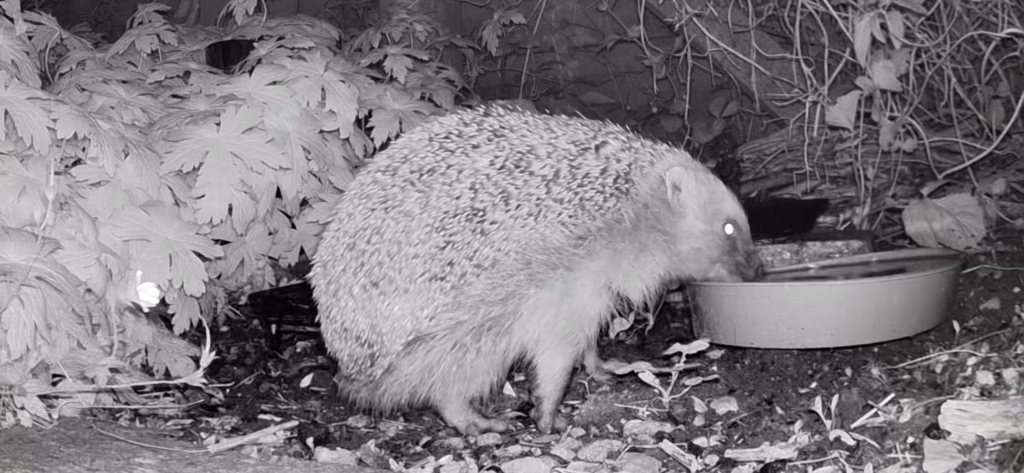
“Due to the loss of natural habitats, the hedgehogs are increasingly moving into our gardens to survive. Therefore, the best way to help hedgehogs is to make your garden hedgehog friendly and provide good nest sites, natural food (by attracting biodiversity to the garden), easy access to the garden and safe surroundings. And when you are done with that, the next step is to spread the important message and make sure your whole local community does the same. This will make a real change for hedgehog conservation.”
Sophie’s favourite animal (other than hedgehogs!)
“To be honest, I love nature and all its creatures! I even name the spiders in my house and talk to them. My neighbours must think I am crazy, as I have hedgehog houses, bat houses, bird houses, bee houses, feeding stations for squirrels, birds and – of course – hedgehogs, and talk to the animals when I am feeding them. But at the moment, my absolute favourite other animal, is Molly, my Coton de Tulear dog.”

