Planting for hedgehogs
1st April 2026
By Helen Bostock, RHS Senior Wildlife Specialist
This information originally appeared in an article by Olivia Drake in the April issue of The Garden, the monthly magazine for members of the Royal Horticultural Society.
Encouraging insect prey
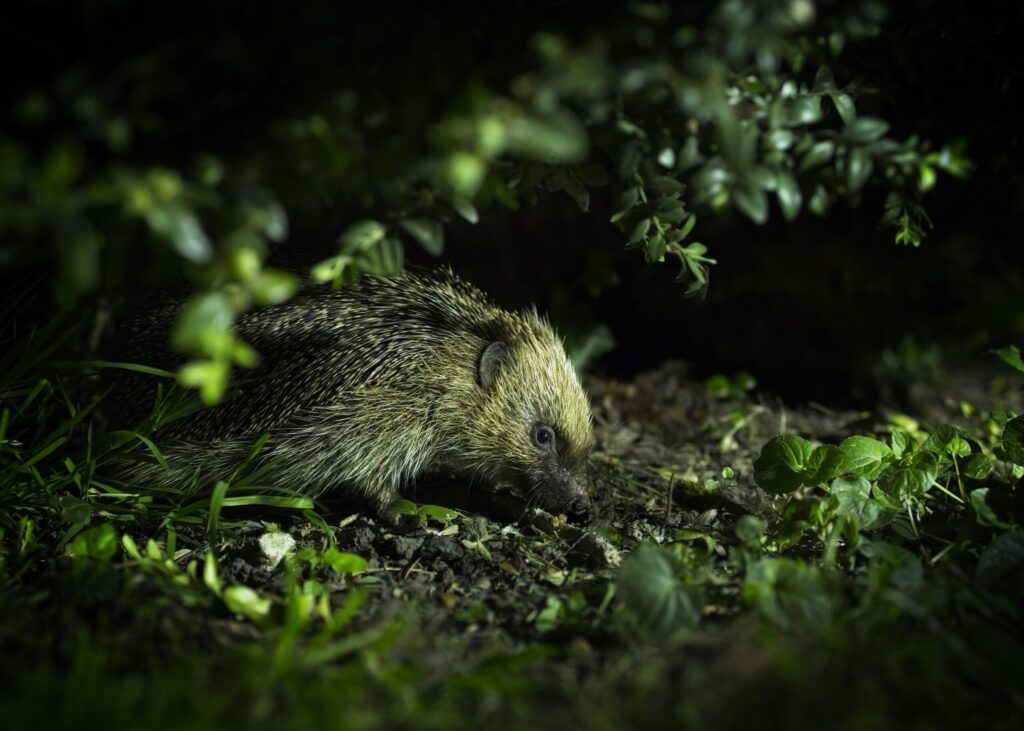
A hedgehog’s diet primarily consists of beetles, caterpillars and worms. The best plants for hedgehogs are those that encourage either these ground invertebrates that are at a hedgehog’s level, or caterpillars, which often pupate at the surface of the soil. Try to create dense, insect-friendly vegetation, including a mixture of caterpillar food plants and plants that provide habitat for ground invertebrates.
Plant a mixture of native and non-native plants – having both can provide a greater benefit than just one or the other. It’s not so critical exactly what the plants are – what’s more important is the vegetation architecture and the conditions that creates. As well as creating a good environment for a range of invertebrates, and shelter for the hogs themselves, it’s about finding the right plant for the garden – which provides for wildlife, but is also able to thrive and stay healthy in the long term to be able to carry out that role well.
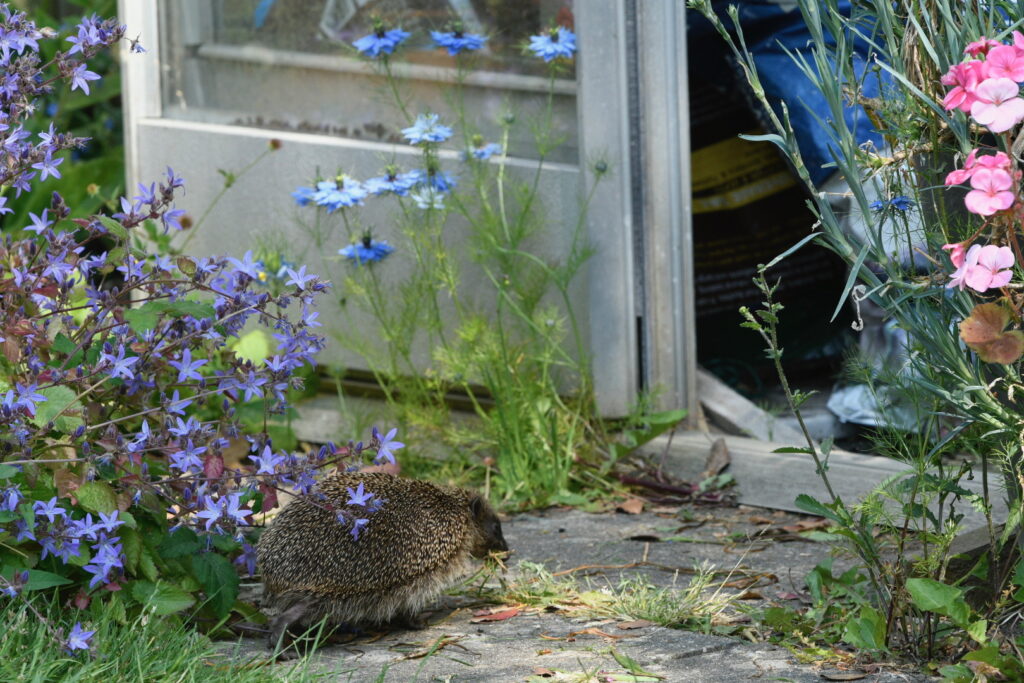
Anything with copious autumn leaf fall is great for hedgehogs. Try to create direct connections between areas with deciduous trees and shrubs. You want dense but not impenetrable vegetation, using plants that form thick growth low down (see examples below). A bed with a few of those forms a ground-level jungle for hedgehogs to move through.
Leave some space in the border to provide direct access to soil, and have a few beds that are nicely mulched with homemade compost or have leaf litter. This particularly encourages earthworms. Try to include hedges, and some short to mid-length grass to support all kinds of invertebrates; even lawn leatherjackets are a hedgehog food item.
Recommended hedgehog-friendly plants
Mixed native or native and non-native hedge
Linear features with cover at the base, such as dense hedges, provide ideal habitat and safe routes between and within gardens for hedgehogs – the clue’s in the name! Try to create direct connections between areas with deciduous hedging. Many hedging species, such as hawthorn, hazel, privet and alder buckthorn, are caterpillar food plants, so double up in encouraging prey species too.
Find out more about garden hedges from PTES’ Key Habitats Officer Megan.
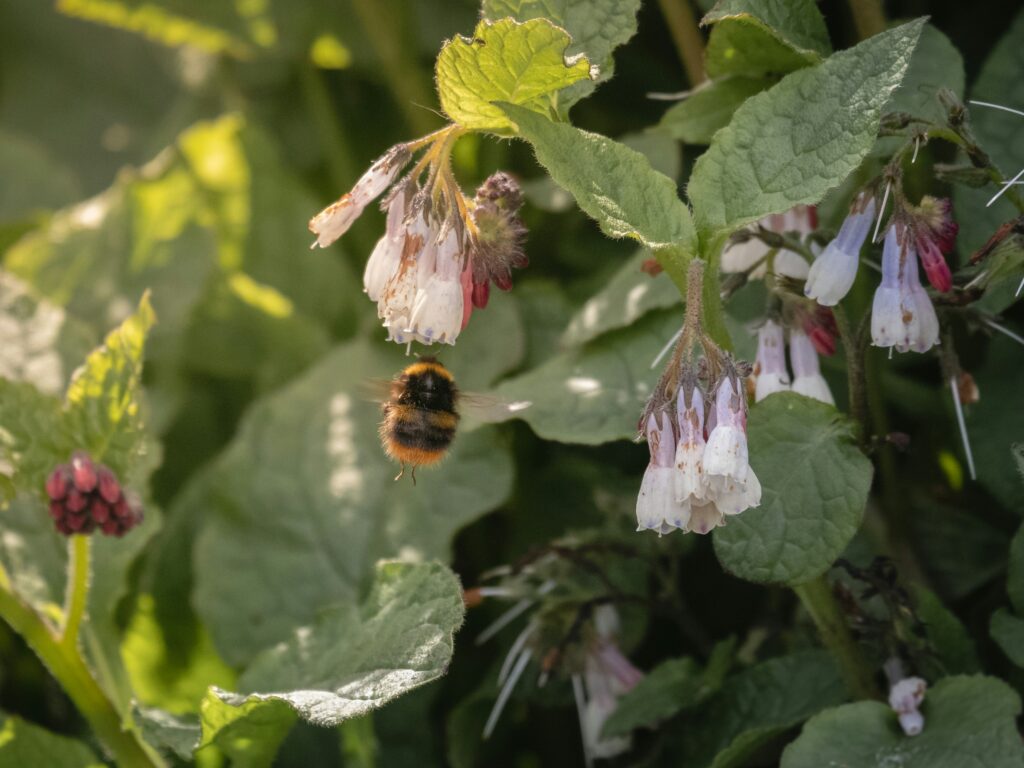
Comfrey (Symphytum officinale)
A native plant that creates the ideal moist, sheltered, ground-covering conditions for beetle habitat. It’s also a food plant for caterpillars such as the scarlet tiger moth.
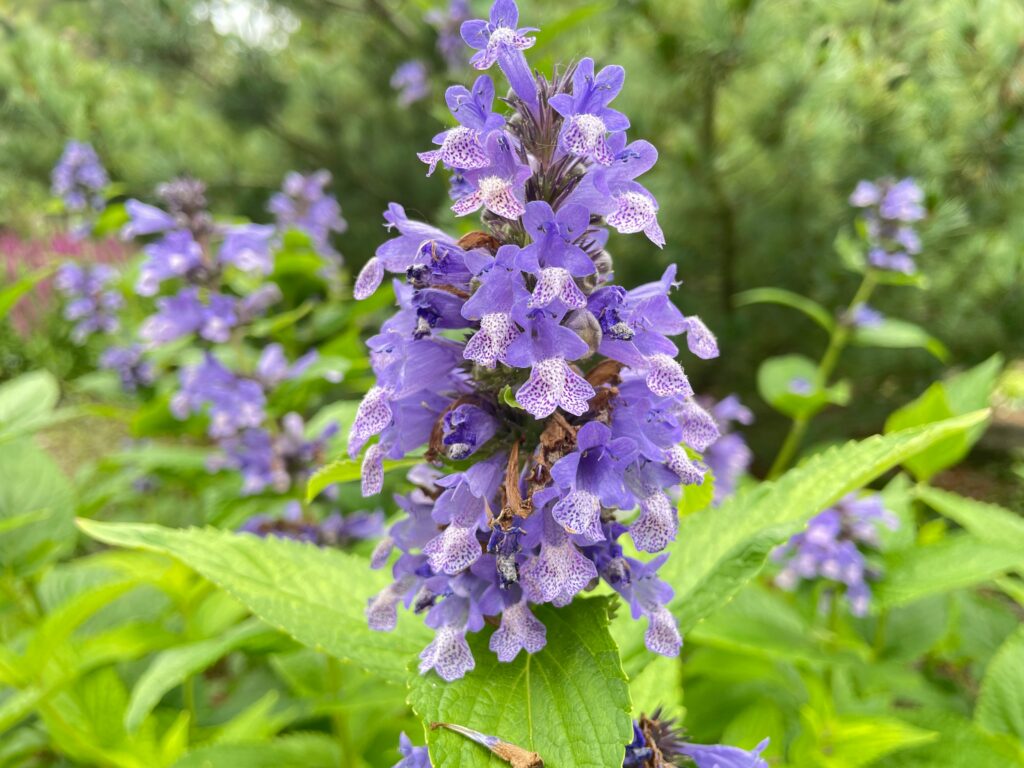
Hardy geraniums (Geranium sp.)
Along with similar ground-covering perennials like catmint (Nepeta), these provide beetle habitat and cover for foraging hedgehogs.
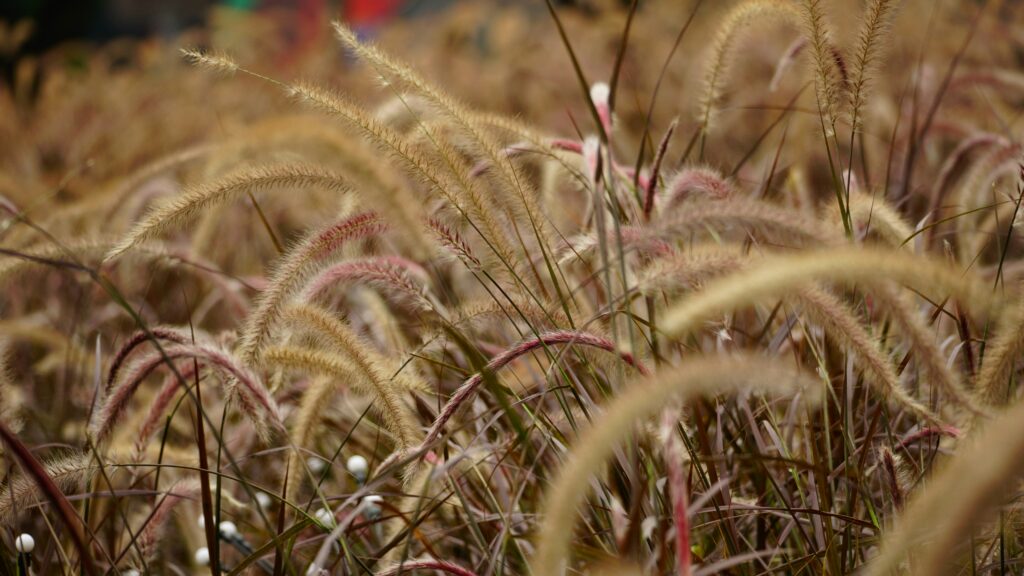
Ornamental grasses
Such as Pennisetum or Calamagrostis – the low, flopping leaves likewise encourage beetles and provide shelter for hedgehogs.
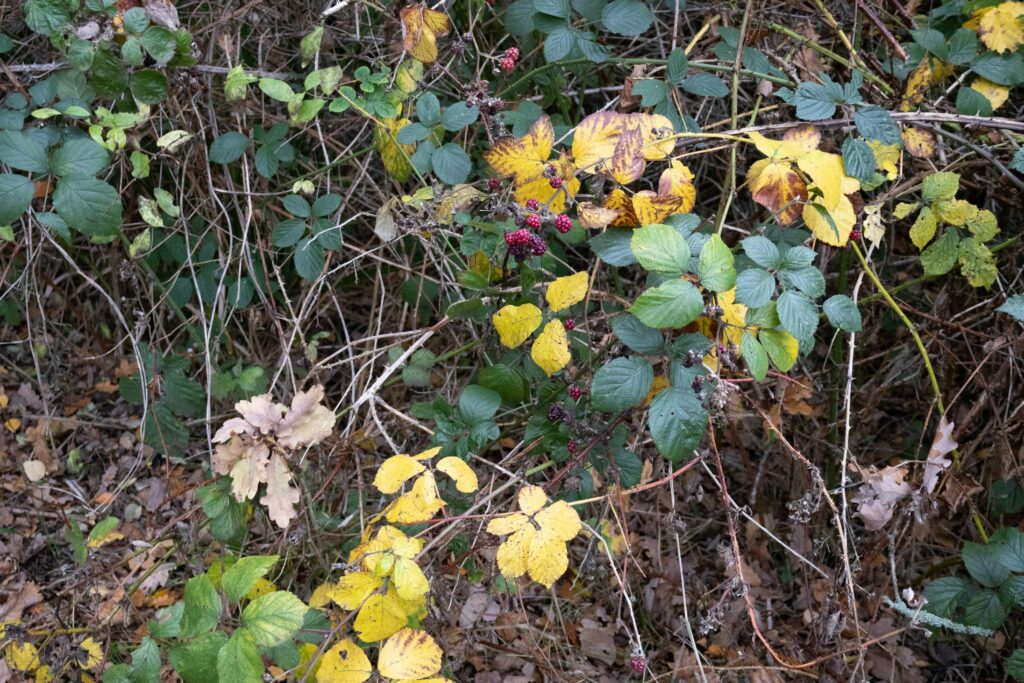
Japanese wineberry (Rubus phoenicolasius)
An ornamental bramble with bristly red stems that mimics a wild bramble patch, providing a low-growing matrix of vegetation that hedgehogs can move through and be given some protection. It could even provide a nesting spot.
Oak or other deciduous trees/shrubs
Whatever space you have, include a deciduous tree or shrub to provide leaf litter. This could be a crab apple or flowering cherry in a small garden, or an oak or birch in a large garden. Oak leaves rot down slowly so make great bedding for hedgehogs. If you benefit from leaf fall from a neighbouring oak, embrace it. Blow leaves onto beds rather than off them – as well as planting, it’s just as much about harnessing what you already have and allowing hedgehogs to use it.
Helen Bostock is the Senior Wildlife Specialist at RHS, working with the Plant Health team to provide wildlife gardening expertise and lead on developing and delivering biodiversity positive targets for the RHS Science Strategy and Sustainability Strategy.

